
TOOLKIT
A SHORT GUIDE TO THE STUDY OF POLEMICAL LITERATURE AND ITS PUBLICS
Author: Pierre-Héli Monot
Publication date: February 17, 2026
Suggested Citation Data: Monot, Pierre-Héli (2026), “Toolkit: A Short Guide to the Study of Polemical Literature and its Publics”, ERC Research Project The Arts of Autonomy: Pamphleteering, Popular Philology, and the Public Sphere, 1988-2018, online, <URL>, <access date>.

As a lasting outcome of our project, we have produced a concise toolkit intended to offer basic conceptual signposts for scholars working on the history of the public sphere, the history and poetics of polemical literature, the social history of autonomy, and the sociology of protest. Diverse as these fields may be, we see this toolkit as a useful contribution for two main reasons.
First, when this project was first elaborated and conceptualized in the late 2010s, the study of polemical literature remained a comparatively barren field. While several influential and provocative works from the 1970s and 1980s had already provided essential insights into the workings of textual dissent, and while certain formal features of polemical writing seemed to display a kind of permanence across eras and political settings, newer questions were emerging. Changes in the infrastructures of dissent, shifting media ecologies, and the evolving character of polemical demands called for a wider conceptual and epistemic framework than the field then offered. On this page, we therefore trace some of these developments and point to key findings, texts, and outputs that have shaped our work.
Second, we conceived this project from the outset as one oriented toward the production of a toolkit. Even as we cast a wide net thematically, historically, and geographically, and even as we published numerous essays on highly heterogeneous materials, certain core problems and questions recurred across the project’s entire scope and duration. Over time, we were able to sharpen the essential stakes of our inquiry and, in turn, develop simple, workable conceptual approaches to material that remains immensely varied. The toolkit gathers those approaches in a form that we hope will be useful to scholars confronting similar questions, working through comparable textual histories, or pursuing adjacent interests.
We prioritized keeping this account as simple as possible. Our aim was to assemble a network of concepts, texts, and outputs that could be read in full over the course of a single academic term. An exhaustive engagement with everything we produced is neither expected nor necessary. Rather, the toolkit offers a navigable set of entry points, recommended readings, and a brief intellectual history of a six-year collaboration that had the privilege of convening and hosting many of the most compelling scholars working on these issues.
We also encourage the transversal application of this work across the humanities and social sciences. Epistemic traditions differ widely between disciplines, and concepts travel unevenly depending on the materials they are asked to illuminate. Still, we take polemical literature to be a paradigmatic object for interdisciplinary analysis. Transversality is, in fact, embedded in the object itself: polemical literature circulates across publics and institutions, frequently occupying unstable or marginal positions, and often lacking a settled academic home. Any account of it therefore benefits from methods and perspectives that cut across conventional disciplinary boundaries.
Because we conceived our outputs as parts of an emergent toolkit rather than as a disparate set of thematically related activities, readers are encouraged to consult the critical apparatus of our publications. We paid close attention to situating our analyses within the traditions we work from and against, and to making those lineages visible in each piece. This emphasis is meant not only to acknowledge debts, but also to help readers see how our conceptual choices were formed and why certain problems came to matter across the project.
Taken together, we believe that engaging with even a portion of these frameworks enables a robust approach to what remains a key intellectual tradition of Modernity. The toolkit is meant to support best practices in the study of polemical literature while also cultivating a deep historical perspective on one of the oldest and still most politically consequential genres in literary history.
Practically, the toolkit is organized around a small set of recurring analytic problems each paired with short conceptual introductions and guided pathways through our publications. Readers can approach it sequentially, as a coherent map of the project’s cumulative argument, or selectively, using individual sections as modular aids for research or teaching. We have also included cross-references between concepts and case materials so that users can move easily between theoretical reflection and historical or textual analysis.
At the same time, we want to be clear about what the toolkit does not attempt to do. It is not a closed theory of polemics, nor a taxonomy that settles definitional debates once and for all. Instead, it is a set of working distinctions and heuristics designed to remain responsive to historical variation and to the uneven availability of archives. Where our own research leaves gaps, whether chronological, geographical, or linguistic, we point to them explicitly, in the hope that others will take them up and revise the framework accordingly.
Finally, we hope the toolkit functions as an invitation. Polemical writing continues to change rapidly as publics, media, and political imaginaries shift, and we doubt that any single project can exhaust the forms it takes. If this toolkit helps scholars articulate new questions, test our concepts against unfamiliar materials, or build collaborations across disciplines and regions, it will have achieved its central purpose. We therefore welcome critical engagement, adaptation, and extension of its proposals, and we look forward to seeing where future work on these problems will lead.
Each entry in this TOOLKIT is divided into three sections. CORE gives a brief definition of a concept or epistemic problem. NODES relates it to other concepts or epistemic problems. STRANDS presents a brief bibliography of relevant texts. We illustrate many of the entries with material from our project.
CORE
The concept of autonomy (autonomía) enters political and ethical vocabulary in classical Greece to designate the capacity of a polis to give itself laws rather than receiving them from an external ruler. In this earliest stratum, autonomy is not primarily a property of individuals but a mode of collective self-institution: to be autonomous is to live under norms that are one’s own, publicly articulated and binding because they are self-authored. This political meaning persists through later reflections on self-rule and civic freedom, and it continues to haunt modern theories even when autonomy is redistributed from the city to the subject. With the Enlightenment, autonomy becomes the decisive name for a series of modern projects that revolve around the concepts of freedom, liberty, and agency. Yet it does so in a distinctly recursive and paradoxical form. Autonomy now signifies a structure in which freedom and normativity are mutually enabling: a subject is free only insofar as it binds itself to laws it has freely given, while a law can count as a law (rather than mere command, habit, or natural necessity) only if it is grounded in the subject’s freedom to legislate and to obey. This mutual implication generates a well-known regress of origins: the “first” law seems to presuppose a freedom that only law could secure, and the “first” freedom seems to presuppose a law that does not yet exist. Political declarations of autonomy repeat the same aporia, insofar as they claim legitimacy in the very act that alone can create it.
NODES
A central wager of this project is to retrace the history of autonomy as a history of formal demands made by social actors using a specific kind of textual infrastructure. We describe how the evolution of demands for autonomy runs alongside new means of autonomous participation in the public sphere. Put differently, we argue that specific infrastructural means had specific and historically evolving affordances for social actors to voice political, civic, economic, or moral demands. For the social history of autonomy and the sociology of protest, the genealogy outlined under CORE has a central implication. Autonomy in social movements is not merely an abstract moral predicate but a contested practice of self-institution under conditions of heteronomy: the attempt to found, authorize, and sustain collective norms without external legitimation.
STRANDS
Böhm, Steffen & Spicer, André & Dinerstein, Ana. (2010). “(Im)possibilities of Autonomy: Social Movements in and beyond Capital, the State and Development.” Social Movement Studies. 9. 17-32.
Kalke, K. (2025). The metamorphosis of autonomy in the digital sphere: Implications for the eco-emancipatory project. European Journal of Social Theory, 28(4), 564-583.
Khurana, K. (2013). “Paradoxes of Autonomy: On the Dialectics of Freedom and Normativity” Symposium: Canadian Journal of Continental Philosophy/Revue canadienne de philosophie continentale 17 (1), 50-74.
Autonomy
“The space of autonomy is the new spatial form of networked social movements.”

Stylus (source)
Mutual Intelligibility,
Embeddedness
CORE
The concept of “mutual intelligibility” refers to a basic condition for polemical communication: polemical statements become meaningfully legible only within a shared, historically sedimented field of prior utterances and conflicts. Mutual intelligibility therefore refers to the historically produced ability of authors and readers to recognize against whom a statement is directed, and which traditions of dissent it affirms, reworks, or negates. Polemical texts are perceived to be “embedded” when this information has been ascertained by readers.
Both concepts are indispensable because polemical literature routinely frustrates the usual tools of literary historicization, periodization, and genre theory. We want to highlight three main problems:
1) Polemical texts often bypass established literary institutions when they first begin to circulate. They often emerge in the form of pamphlets, letters, broadsides, samizdat compilations, zines, or digital fragments that travel through informal networks or counterpublics. As a result, their reception histories are rarely linear. They may be read with different degrees of contextual knowledge, and they can be continuously reactivated by new events. Any attempt to fix such texts within stable institutional chronologies risks missing the temporalities proper to polemical circulation.
2) Polemical texts frequently have merely polemical afterlives. Some writings acquire polemical value long after their production, sometimes in explicit contradiction to their self-descriptions or initial reception. Conversely, texts that once served polemical purposes may later be neutralized or aestheticized. Mutual intelligibility thus demands that taxonomies not rely on generic self-naming alone. The polemical function of a text is not an intrinsic attribute but a social and historical relation. Readers often draw on other, comparable texts to attribute “polemicity” to texts.
3) Polemical publics often sustain a striking degree of historical informedness despite lacking a stable archive of previous polemical texts. Polemical traditions are seldom preserved with the care afforded to canonical genres. They are rarely anthologized, frequently censored, and often lost. Yet social actors remember and repeat polemical positions informally (for instance via private collections, pirate copies, sloganization, and debate).
From this angle, polemical intelligibility is necessarily relational. In a deceptively structuralist sense, statements must be read in relation to other statements. But the structure in question is not a neutral system of language: it is the historically variable outcome of political struggle. Polemical actors draw on earlier claims, criticize them, negate them, radicalize or deradicalize them, authenticate themselves through them, or restate them under new conditions. To interpret a polemical utterance is thus to reconstruct the field of mutually distinguishing or mutually authorizing moves within which it could be understood at all.
A second implication follows for scholarship: retrospective analysis must confront the likelihood that the polemical tradition once enabling intelligibility is partially or wholly inaccessible. What was tacitly shared knowledge at the time of circulation may be irretrievably lost. Historians therefore face a double task: to read texts as interventions into a living polemical series, and to account for the gaps, silences, and discontinuities that now make that series difficult to recover.
As a best practice guideline, we thus recommend working on sets of polemical texts whose historical or thematic proximity can be ascertained to a satisfactory degree, rather than on individual statements or texts. Rather than treating a single pamphlet as a self-sufficient source text, we recommend mapping the proximate texts that once allowed specific polemical statements to become intelligible to readers.
NODES
The feminist movement is particularly dependent on the mutual intelligibility of its polemical literature, as are many of the longue durée social movements that cultivated a historical self-understanding, from the socialist movement to the long struggle for the abolition of slavery in the United States. A transnational approach to the emergence and transcultural circulation of its evolving feminist positions is forthcoming from this project (see under STRANDS, Bebnowski “Monograph”). The sloganization, i.e., extreme compression of entire polemical traditions provides an important bridge between literary history and the history of social movements (see under STRANDS, Weber). The recoding of previous polemical traditions for sometimes contrary goals is a constant feature of the history of the pamphlet (see under STRANDS, Bebnowski “Umkodierung”).
STRANDS
Janet Lyon, Manifestoes: Provocations of the Modern, Cornell University Press, 1999.
David Bebnowski, forthcoming monograph
David Bebnowski, “Die Umkodierung des Proletariats. Druckerzeugnisse im Kampf der NSDAP um die Arbeiterschaft.” Kleinformate im Umbruch: Mobile Medien für Widerstand und Kooperation (1918–1933), edited by Caroline Adler, Maddalena Casarini and Daphne Weber, Berlin, Boston: De Gruyter, 2023, pp. 37-58.
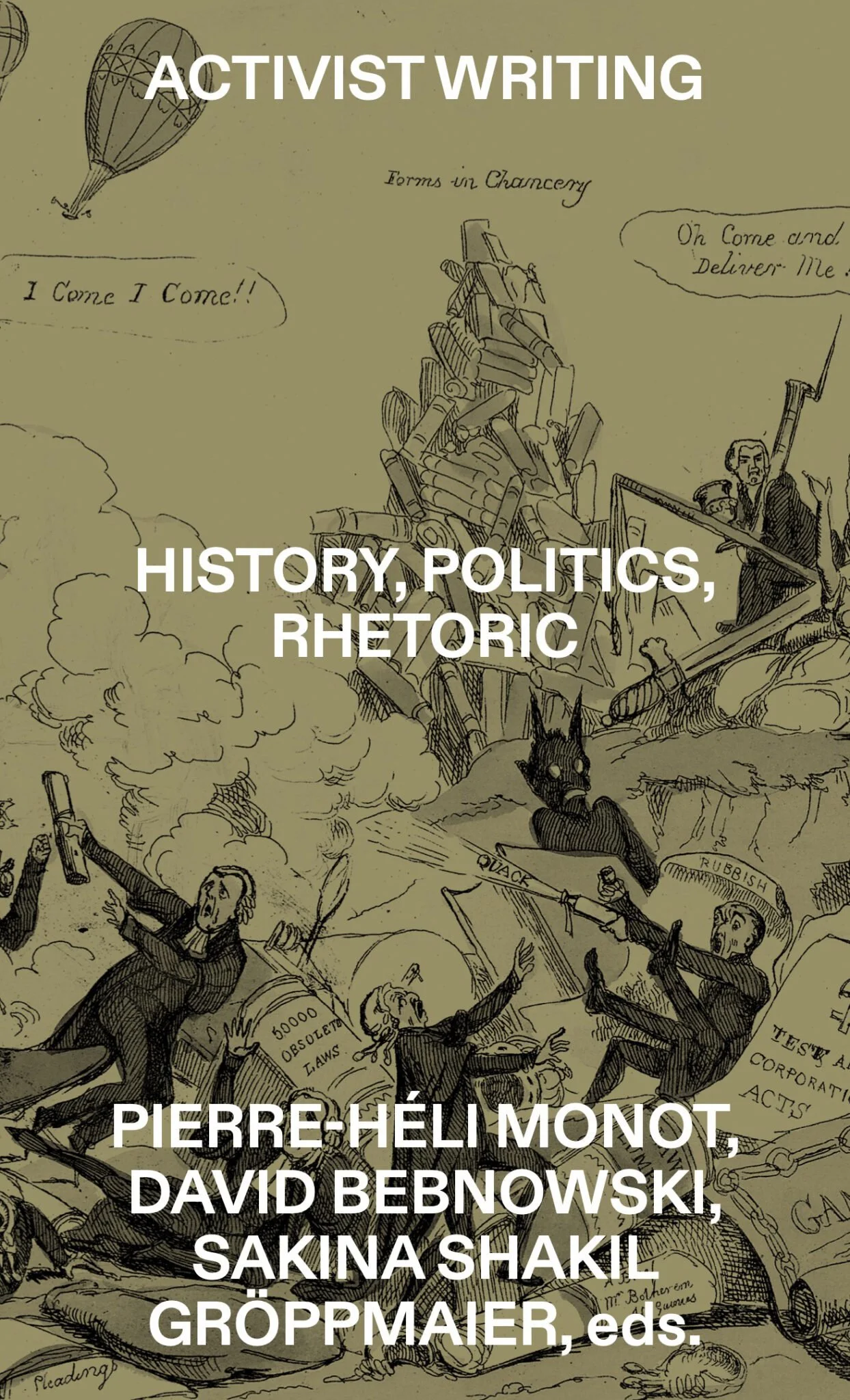
Daphne Weber, "Material for Agitation", in: Activist Writing – History, Politics, Rhetoric, ed. Pierre-Héli Monot, David Bebnowski, Sakina Shakil Gröppmaier, Zürich: intercom Verlag, 2024. pp. 129-140.

“When I stand before you here, Judges of Israel, to lead the Prosecution of Adolf Eichmann, I am not standing alone. With me are six million accusers. But they cannot rise to their feet and point an accusing finger towards him who sits in the dock and cry: “I accuse.” For their ashes are piled up on the hills of Auschwitz and the fields of Treblinka, and are strewn in the forests of Poland. Their graves are scattered throughout the length and breadth of Europe. Their blood cries out, but their voice is not heard. Therefore I will be their spokesman and in their name I will unfold the awesome indictment.”
An example of an historically embedded statement, referencing a previous polemical text.
“I accuse Lt. Col. du Paty de Clam of being the diabolical creator of this miscarriage of justice— unknowingly, I am willing to believe— and of defending this sorry deed, over the last three years, by all manner of bizarre and evil machinations.
I accuse General Mercier of complicity, at least by mental weakness, in one of the greatest inequities of the century.
I accuse General Billot of having held in his hands absolute proof of Dreyfus’s innocence and concealing it, thereby making himself guilty of crimes against mankind and justice, as a political expedient and a way for the compromised General Staff to save face.”
“...it would be a mistake to see the form simply as a vehicle of complaints of all stripes; far from being no more than the scaffolding for expression of angry dissent, the manifesto’s formal contours actually produce and intensify the urgency of its particular imperatives. They do so in part by activating the symbolic force of the form’s role in earlier political confrontations: to write a manifesto is to announce one participation, however discursive, in a history of struggle against oppressive forces. ”
Infrastructure
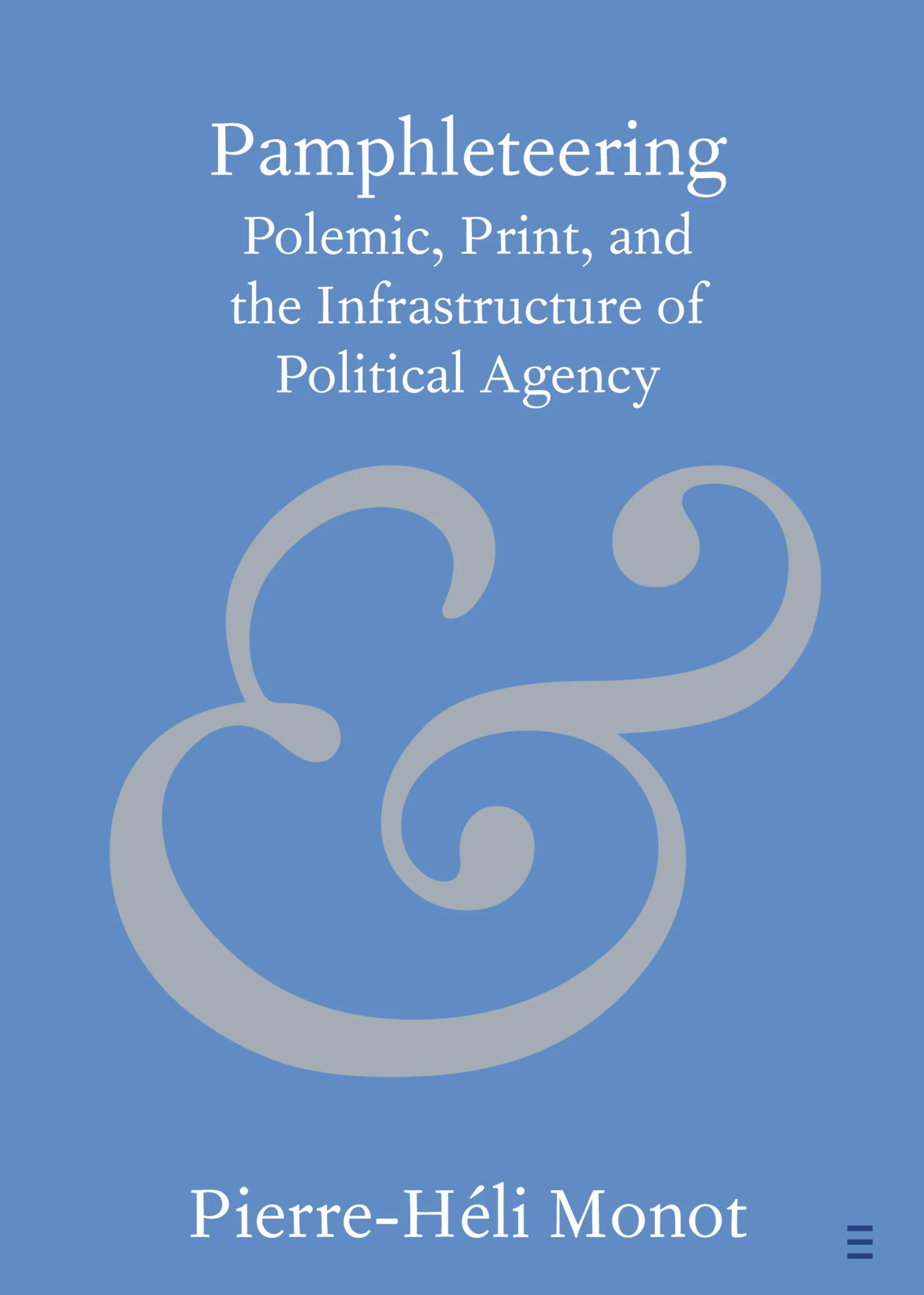
Cambridge University Press, 2025
CORE
Historically, scholars of polemical literature have been exceptionally attentive to the history of publication infrastructures. Elizabeth Eisenstein’s landmark study The Printing Press as an Agent of Change (1980) and Robert Darnton’s numerous monographs and articles on the print culture of the French Revolution have all emphasized the role of material means of reproduction for the social history of political dissent. The introduction of compulsory education at the dawn of the 20th century, the emergence of affordable paperback editions, the relative democratization of infrastructures of textual reproduction have all had a decisive impact on the way readers and writers think about their ability to effect normative change. One of the central questions that drove this project was to think about the emergence of digital networks and generalized internet access as a revision to the insistence on infrastructure in scholarship on pamphleteering. How should scholars approach the fact that before the ongoing digitalization of the public sphere, polemical literature already provided a dialogical platform that allowed readers to interact with and respond to other social actors, polemicists or not? How do social actors attribute to themselves the power to act in a politically effective and meaningful way?
As a best practice guideline, we suggest a robust understanding of the high specificity of the infrastructures involved in the production, circulation, and reception of polemical statements. Throughout the project, we have engaged critically with sweeping generalizations concerning the evolutions of infrastructures of communication. We have argued (see STRANDS, Barth and Monot) that some particularly high-impact theses of recent years have neglected to consider the importance of polemics for the very emergence of a public sphere and its material means of existence.
NODES
The question of printing and circulation infrastructures is entwined with the other great infrastructural constant of the polemical literary field: surveillance, which has often sought to preemptively counteract the application of infrastructural innovations for partisan purposes (see STRANDS, Monot, “Pamphleteering”). This project has theorized the agential effects of radical infrastructures as a historically specific kind of political pressure (see STRANDS, Bebnowski). The transformation of mechanical infrastructures into digital ones has been a constant object of interest in this project (see STRANDS, Staab). We have emphasized the materiality of digital infrastructures and described their political import in the present (see STRANDS, Gröppmaier)
STRANDS
David Bebnowski, “Mit Druckerzeugnissen Druck erzeugen – Flugschriften als Quellen für die Intellectual History der Neuen Linken als Konfliktgeschichte”, Internationales Archiv zur Sozialgeschichte der deutschen Literatur 48, no. 1 (2023), 163-194.
Pierre-Héli Monot, Pamphleteering: Polemic, Print, and the Infrastructure of Political Agency, Cambridge: Cambridge University Press, 2025.
Niklas Barth, Pierre-Héli Monot, “Negationen der Negationskontrolle: Eine Infrastrukturgeschichte polemogener Rede”, forthcoming.
Sakina Shakil Gröppmaier, forthcoming monograph.
Christoph Streeb, “Postures”, in: Activist Writing. History, Politics, Rhetoric, ed. Pierre-Héli Monot, David Bebnowski, Sakina Shakil Gröppmaier , Zürich: intercom, 2024, p. 27–38.
“One of the main constitutive elements of feminist autonomous infrastructures lies in the concept of self-organisation already practised by many social movements that understand the question of autonomy as a desire for freedom, self-valorisation and mutual aid. [...] A server can be defined as a computer connected to a network that provides services such as hosting files, websites and online services. Because all online resources are hosted on servers, they constitute a base for the internet as we know it. All servers are ruled by different terms of service, governance models and national legislation in relation to privacy and access to data by third actor parties (or “trackers”) and are dependent on a variety of business models.”

Typewriter (source)
Common Knowledge,
Mutual Knowledge
On the Addressability of Pamphletary Statements and the Recursivity of Polemic
Zürich: Intercom, 2024
CORE
One of the most interesting aspects of studying polemical statements is the way their circulation makes knowledge broadly available to reading publics. Yet this fact is often discussed summarily and without paying attention to the way this knowledge itself affects how individual readers conceive of the publics they belong to. Put differently, circulation affects how readers imagine the publics they evolve in, how they assume knowledge to be shared by others, and how they assess their ability to act in politically meaningful and effective ways. As such, pamphletary texts and their publics evolve in a recursive loop.
Summarizing from our work (see STRANDS, Monot), we suggest a key question: when does the prospect of receiving promised incentives outweigh the risk of affiliating with a pressure group that cannot credibly guarantee those incentives in advance? A useful way to frame this problem is to borrow game theory’s distinction between “common knowledge” (David Lewis, 1965) and “mutual knowledge” (Stephen Schiffer, 1972). Knowledge is common when all agents know a proposition, know that everyone knows it, know that everyone knows that everyone knows it, and so on indefinitely. Knowledge is mutual when all agents know the proposition but cannot be sure that others do. Common knowledge is thus a stronger, recursive form of mutual knowledge.
This distinction highlights a key mechanism of pamphletary power. Aligning with a factional claim becomes a rational wager only when participants can plausibly treat the knowledge grounding their partisanship as not merely mutual but likely to be common. In other words, the incentive to support a faction depends on the ability to imagine its proposition as potentially majoritarian. That ability rests on the expectation that others share the same knowledge, that they recognize this symmetry, and that such recognition is itself widely shared. As pamphlets travel, they make it more credible that others have encountered the same claims and that this encounter is itself publicly recognizable. This shift matters: it lowers the perceived risks of association with what might otherwise appear a marginal faction. In that sense, pamphlets generate political pressure because they help transform dispersed mutual knowledge into something that looks, to actors, like common knowledge.
NODES
Seen this way, the recurrent efforts of police and state surveillance institutions to restrict pamphletary circulation become easier to understand. What is being targeted is not only the content of polemical claims, but the second-order effect of circulation on counterpublics: the growing plausibility that dissenting knowledge is shared, recognized as shared, and therefore capable of grounding coordinated action. In turn, the transformation of mutual knowledge into common knowledge is an important step towards the formation of intersectional coalitions of interest. Heterogeneous pressure groups may safely assume other groups to share knowledge of common propositions.
STRANDS
Pierre-Héli Monot, "Pretty Pamphlets", in: Activist Writing – History, Politics, Rhetoric, ed. Pierre-Héli Monot, David Bebnowski, Sakina Shakil Gröppmaier, Zürich: intercom Verlag, 2024. pp. 129-140.
Nils Kumkar, “Short-Circuiting Publicity”, in: Activist Writing – History, Politics, Rhetoric, ed. Pierre-Héli Monot, David Bebnowski, Sakina Shakil Gröppmaier, Zürich: intercom Verlag, 2024. pp. 40-50.
Florian Zappe, forthcoming monograph
David Lewis, Convention: A Philosophical Study, Oxford: Blackwell ([1965] 2002).
Stephen Schiffer, Meaning, Oxford: Clarendon Press (1972).
“Actually, however, everybody knows that the factory owners frequently impose fines without the workers being to blame at all, e.g., in order to speed up the workers.”

Diptych (source)
Reading Publics
Public Sphere
Counterpublics
CORE
Polemical literature has been a central vector in the emergence and successive transformations of the public sphere. With the generalization of the printing press in the first half of the 16th century, deliberative or communicational structures became accessible to overwhelmingly marginalized, poor, and illiterate populations. The spectacular outpouring of pamphlets throughout the 16th century made radical political and religious statements ubiquitous both in urban centers and in the province. Wherever such texts circulated (in England, Scotland, Ireland, France, and beyond) they tended to intensify popular discontent and often antagonized social groups. At roughly the same time, printers and booksellers across France and the German territories built more stable channels for distributing contentious material. Particularly in the 18th and early 19th centuries, this activity fostered patterns of reciprocal radicalization. Readers were drawn into opposed camps and pressed to defend their positions, whether by appeals to reason or by more purely rhetorical means. This history complicates the Habermasian conception of the “public sphere”. Even when the discourse presents the public sphere as an institution geared towards universality, rationality, and mutual respect, its implicit subject is highly specific. The gap between the universalist language of the bourgeois public sphere and the social reality of participation was a feature of the very structure of the public sphere. The sprawling generalization of pamphletary writing thus throws the deficits of the “public sphere” into sharp relief. Beyond and alongside bourgeois, polite reading publics, other forms of literacy took shape in working-class, abolitionist, feminist, and marginal milieus. Here, low-cost, ephemeral print circulated hand to hand, was read aloud, or passed around in workplaces and taverns. As controversial pamphlets spread, states and local authorities responded not only by prosecuting individual authors or printers, but also by tightening controls over circulation itself. Surveillance measures were stepped up; networks of informers and censors were expanded; the movement of suspect material was monitored more closely. What was at stake was not simply the presence of heterodox ideas in print, but the possibility that such ideas might help constitute alternative reading publics and counterpublics that did not fit the discursive norms of bourgeois Öffentlichkeit, yet were capable of forming and acting on their own “public opinion.” Pamphleteering hence forces a revision of any straightforward narrative about a single, integrating public sphere. The same period that witnesses the consolidation of a bourgeois culture of rational-critical debate also sees the proliferation of oppositional publics structured around polemical print. As a best practice guideline, the “public sphere” is best approached not as a single, integrating arena but as a shifting configuration of intersecting publics and counterpublics. Bourgeois Öffentlichkeit should not be treated as the neutral background against which “deviant” polemical practices stand out. Rather, polite publics, factional publics, and oppositional reading communities emerge together, define themselves against one another, and are sustained by different infrastructures of print, habits of reading, and regimes of surveillance. The norms of rationality and civility that characterize bourgeois discourse are one historically specific way of organizing publicity among others, not the measure of publicity as such. Methodologically, this suggests treating pamphlets and other short polemical forms as instruments for making and unmaking publics. The same text may function, in a coffee house, as a witty contribution to informed discussion and, in a tavern or meeting house, as a call for mobilization. Rather than assigning such a text to “the” public sphere in the abstract, it is more precise to reconstruct the concrete reading situations in which it circulates, to track its movement across them, and to examine how its style, genre, and material format (cheap print, broadsides, chapbooks, anonymous tracts) delimit who is being addressed as part of “the public.” Measures of censorship, prosecution, and informal intimidation belong to this analysis as well: they help define the outer limits of admissible participation and shape which publics can persist over time. More generally, the concept of the public sphere gains in clarity when applied in the plural and anchored in specific textual histories. Instead of asking whether a given pamphlet “belongs” to the public sphere, it is more productive to ask which publics it helps to constitute, which it excludes, and which it presupposes. Counterpublics are not merely secondary offshoots of a primary, bourgeois public; in many contexts they are the primary sites where new claims, vocabularies, and political subjectivities first take shape. A historically attentive account of pamphleteering will therefore begin from the multiplicity of publics, tracing how polemical texts circulate among them, how they polarize or connect different constituencies, and how they expose the limits of any purportedly universal public order.
NODES
The social history of reading and reading publics intersects with notable evolutions in the history of printing infrastructures. The question whether the digitalization of public communication constitutes yet another “structural transformation of the public sphere” had dominated adjacent scholarly discourse since the early 2010s. The historicization and concrete description of counterpublics and partisan reading publics since the early 16th century is still fragmentary. We would encourage scholars to engage with the countless archives of dissent in print and, in turn, to use this archival work to refine theoretical approaches to deliberation and public discourse. More generally, many of the great thematic clusters of 20th century literary and social history have, arguably, insufficiently questioned the way they relate to the public sphere, reading publics, and counterpublics; the way the abolitionist movement, Civil Rights activists, neo-luddite pamphleteers, but also the New Right conceive of their own involvement in these institutions should continue attracting scholarly attention.
STRANDS
Jürgen Habermas, The Structural Transformation of the Public Sphere: An Inquiry into a Category of Bourgeois Society, Cambridge: Polity, (1962 trans 1989).
Jürgen Habermas, A New Structural Transformation of the Public Sphere and Deliberative Politics, Cambridge: Polity, 2023.
Michael Warner, Publics and Counterpublics, Zone Books, 2002.
Zizi A. Papacharissi, A Private Sphere: Democracy in a Digital Age, Cambridge: Polity Press, 2010
Zizi A. Papacharissi, Affective Publics: Sentiment, Technology, and Politics, New York and Oxford: Oxford University Press, 2014.
David Bebnowski, “Writing in Privacy to Mass Publics: The Pamphleteer as an Activist Writer”, Privacy Studies Journal, no. 1 (2022), pp. 24-48
Niklas Barth, Pierre-Héli Monot, “Negationen der Negationskontrolle: Eine Infrastrukturgeschichte polemogener Rede”, forthcoming.
Manuel Castells, Networks of Outrage and Hope: Social Movements in the Internet Age, Cambridge: Polity Press, 2012.
Christian Fuchs, Social Media: A Critical Introduction, London: Sage Publications, 2014.
Jodi Dean, Blog Theory: Feedback and Capture in the Circuits of Drive, Cambridge and Malden, MA: Polity Press, 2010.
Zeynep Tufekci, Twitter and Tear Gas: The Power and Fragility of Networked Protest, New Haven and London: Yale University Press, 2017.
“A public is the social space created by the reflexive circulation of discourse. This dimension is easy to forget if we think only about a speech event involving speaker and addressee. In that localized exchange, circulation may seem irrelevant, extraneous. That is one reason why sender-receiver or author-reader models of public communication are so misleading. No single text can create a public. Nor can a single voice, a single genre, or even a single medium. All are insufficient to create the kind of reflexivity that we call a public, since a public is understood to be an ongoing space of encounter for discourse. It is not texts themselves that create publics, but the concatenation of texts through time. Only when a previously existing discourse can be supposed, and a responding discourse be postulated, can a text address a public.”

Printing Press (public domain)
Quantities
Quantification
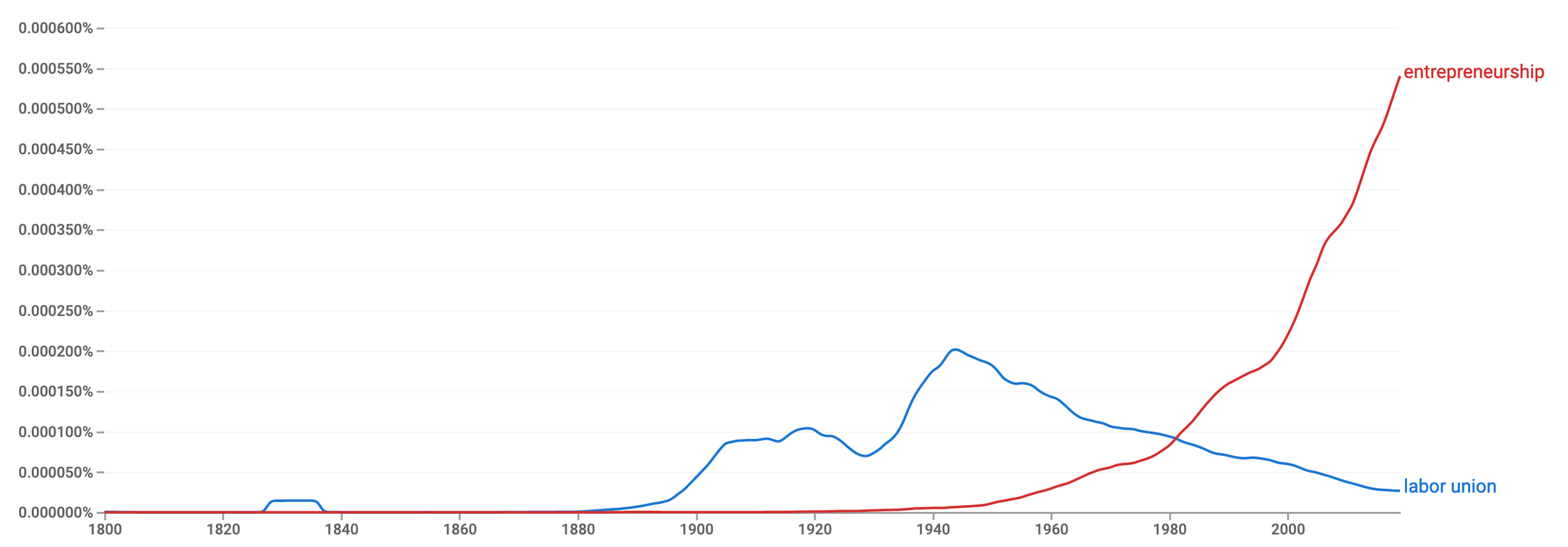
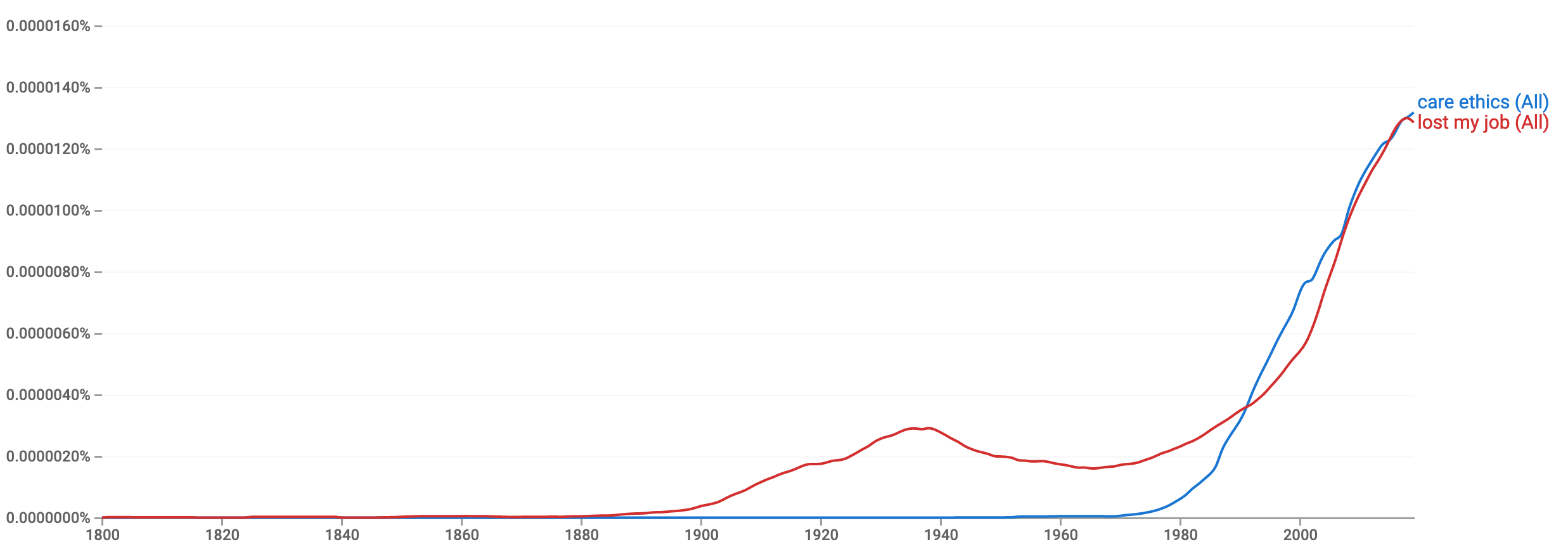
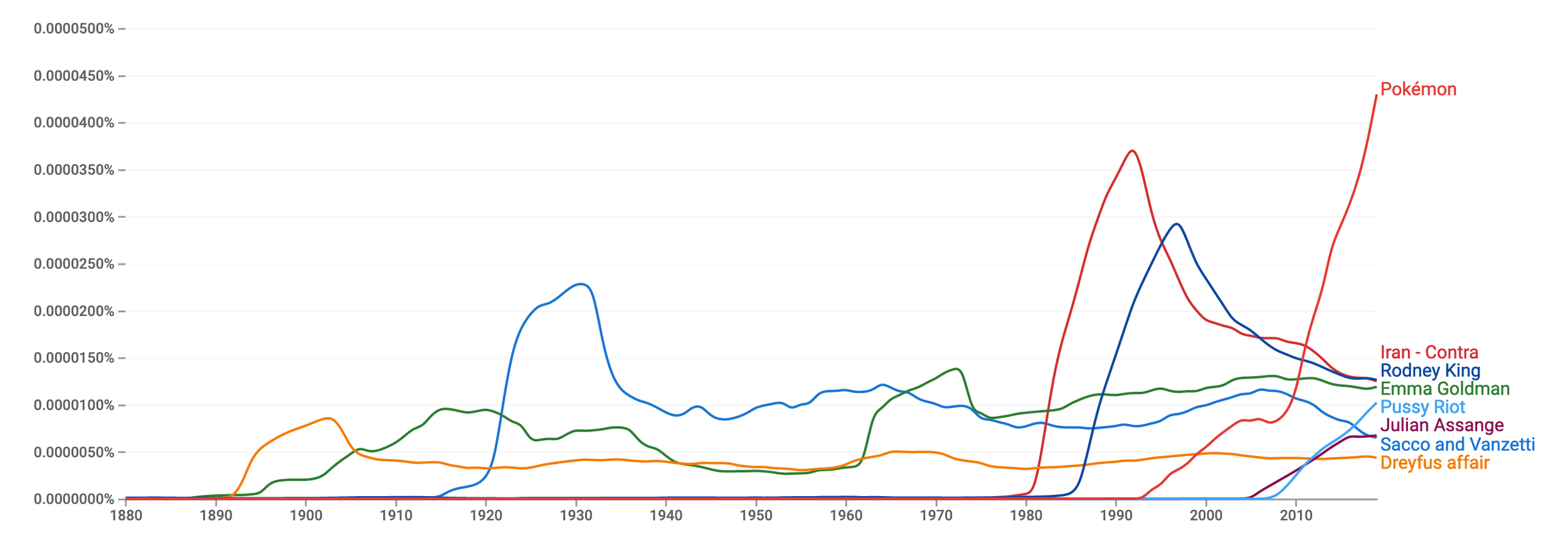
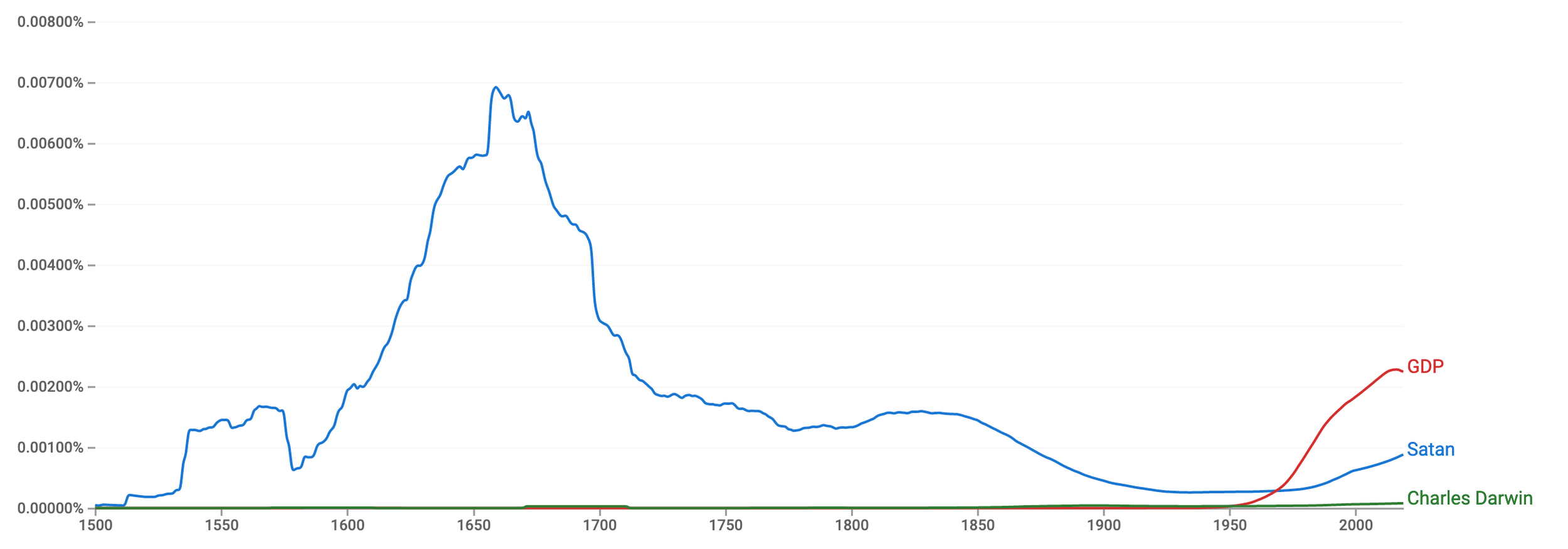
Random thematic selection of Ngrams, made using Google Ngram Viewer by Pierre-Héli Monot. Corpus: Google Books in English (US & English), various timescales, various smoothing factors–and various hermeneutic challenges…
CORE
One of the most striking features of polemical speech and writing is the way they can be brought to play upon extant understandings of literary quantity, analytic quantification, and the scalability of political movements, i.e., the way they force questions of scale to the foreground: what counts as a “lot” of text, how political claims become quantifiable, and how movements imagine themselves as majoritarian or marginal. Any study of polemical practices should at some point engage with the fact that they are often mass phenomena involving enormous quantities of semiotic material, countless individual texts or utterances, and innumerable participants (authors, printers, distributors, readers, censors, informants, commentators). Even in relatively small regional or thematic contexts, pamphlets and other short-form interventions can saturate the communicative space to a degree that outstrips most other genres. This, put bluntly, is a unique affordance of short-form polemical writing. In fact, from the late 15th century onward, pamphleteering acquires a scale that poses a challenge even for system-oriented literary histories. Estimates for the early Reformation period suggest that between 1500 and 1530 more than ten thousand distinct pamphlet titles were printed, often in runs of several hundred or several thousand copies. Between 1518 and the mid-1520s, the total number of pamphlet copies in circulation is plausibly measured in the millions. Such figures are contested, but they indicate that polemical print was not a marginal supplement to “serious”, or long-form literature. Pamphleteering was, and often still is, a society-at-large practice with the potential to address and disturb the body politic as a whole. Thomas Paine’s pre-revolutionary texts are only the most familiar example of pamphlets that, for a time, appear to organize political attention almost single-handedly.
It would be misleading, however, to infer from this sheer volume that the social efficacy of polemical writing resides in its magnitude alone. Historical episodes show that some polemical utterances succeed in triggering large-scale debate, while others, comparable in content, form, and intended audience, leave barely a trace. Émile Zola’s “J’accuse…!”, published in the Aurore during the Dreyfus Affair, is a classic example: Zola had published earlier polemical texts on the same case that did not generate anything like the same public reaction. The effect of “J’accuse…!” cannot be explained simply by adding one more text to a growing corpus. At least part of its force must be tied to features of the text itself and to the specific configuration of publics into which it entered.
This raises a problem that cannot be resolved by quantifying polemical texts alone. In addition to the near-industrial scale of polemical production, circulation, and consumption, scholars must account for the “massification” of attention and alignment: how a finite set of utterances comes to structure perceptions and organize antagonistic factions in comparatively short spans of time. Some texts act as “condensers” of diffuse discontent; others supply a vocabulary that can suddenly be taken up across disparate milieus, sometimes even across antagonistic factions. Methodologically, this suggests that studies of polemical literature should work with more than one concept of quantity. On one level, there is the quantitative magnitude of printed or transmitted material (numbers of titles, editions, copies, and reprints; size and density of distribution networks; breadth of geographic reach, etc.). On another level, there is the more elusive question of how many people are actually oriented by a given polemical claim, how intensely, and for how long. The former can sometimes be reconstructed from archival data; the latter often has to be inferred from traces in letters, administrative records, court cases, re-citations, and the emergence of recognizable factions in the public sphere. This, we believe, contradicts simple quantitative, or even statistical approaches to the study of polemical texts. The tension between mass phenomena and specific utterances also has consequences for how corpora are assembled. A purely text-centered sociology of literature, which treats anonymous “systems” or “fields” as primary objects, risks flattening the dynamics that make certain polemical texts pivotal: in other words, we still need to understand why “J’accuse…!” had an impact as an individual text. Conversely, a focus on a handful of celebrated pamphlets can obscure the background noise against which they begin to stand out. A robust account of scale will therefore combine distant and close perspectives that reconstruct the broad quantitative environment within which polemical writing circulates, while they also attend to the singular texts and episodes that reconfigure that environment.
As a best practice guideline, we recommend doing the epistemic “heavy lifting” along the lines of book history and social history by developing a general account of the state of a polemical field at a given time (who wrote? For whom? How many texts? How did these texts circulate? How did they articulate demands and ideas that were located outside polemical publics and practices? Etc.). We then recommend focussing on thematic “clusters”, that is, the points at which this mass of material appears to crystallize into recognizable positions, groupings, or campaigns. Finally, we recommend focussing on the individual texts that play a disproportionate role in this crystallization. Such a procedure neither reduces efficacy to scale nor ignores scale in favor of exemplary texts.
NODES
Pamphletary mass phenomena have occurred since the spread of printing infrastructures in the early sixteenth century. The Elizabethan pamphlet wars, the intense polemical activity of prerevolutionary France, the huge volume of writing around the abolition of slavery in the United States, the antifascist pamphlets of 1930s Europe, the high-circulation materials of the Civil Rights Movement, the “viral” statements of early internet culture, and the polemical texts of third- and fourth-wave feminism have all triggered large-scale discussion of their claims and, more often than not, had noticeable political effects. The partial digitalization of the public sphere and of counterpublics has not only expanded the potential scale of pamphletary events; it has also sharpened scholarly interest in the scalability of social movements and political demands. The surveillance of populations in general, and of targeted demographics in particular, can sometimes be fruitfully contrasted with the ways movements themselves measure and imagine their own scale as an indicator of common knowledge. Digital infrastructures intensify this asymmetry. On the one hand, they enable polemical texts to circulate at unprecedented speed and volume, allowing relatively small interventions to reach very large audiences. On the other hand, they embed these interventions in platforms whose algorithms and moderation policies shape visibility, amplify certain forms of conflict, and suppress or fragment others. “Going viral” becomes a new version of the older problem of pamphletary scale: when and why does a specific utterance, among innumerable others, suddenly organize attention across dispersed publics? As a best practice guideline, we therefore recommend holding together various dimensions of scale in the study of polemical phenomena: the material scale of production and circulation (how many texts, in what formats, through which channels), the perceived scale within movements and publics (how actors themselves narrate their size or strength), and, whenever possible, the scale authorities attribute to polemical mass events through observation and surveillance.
STRANDS
Andrew Pettegree, ‘Books, Pamphlets and Polemic’, A. Pettegree, ed., The Reformation World, Routledge, 2000, pp. 109–126.
Jeff Jarvis, The Gutenberg Parenthesis: The Age of Print and its Lessons for the Age of the Internet, Bloomsbury Academic, 2023.
Peter Stallybrass, ‘‘Little Jobs’: Broadsides and the Printing Revolution’, S. A. Baron, E. N. Lindqvist, E. F. Shevlin, eds., Agent of Change: Print Culture Studies after Elizabeth L. Eisenstein, University of Massachusetts Press, 2007, pp. 315–341.
Pierre-Héli Monot, Pamphleteering: Polemic, Print, and the Infrastructure of Political Agency, Cambridge: Cambridge University Press, 2025.
“Openness and scalability, modularity and trust, transparency and security; these are some keywords emerging from contemporary debates about the structure and future of the Internet among engineers, entrepreneurs, and other individuals intimately involved with the programming and design of technical infrastructures. [...] This nexus of technology and politics is where the fieldwork described in this article took place, focusing on a distinct social group whose defining characteristic is recursive in nature: a group constituted by a shared, profound concern for the technical and legal conditions of possibility for their own association. I call this mode of association a “recursive public”; the people who participate in it will be referred to as “geeks”; and the Internet is the condition of their association.”
Dihedral Structure (source)
Transnational Literary Studies
CORE
Over the last three decades, the philological humanities have undergone a transformation whose scope is only gradually becoming clear. Where national or regional philologies (under disciplinary headings such as Germanistik, Littérature française, English, etc.) once concentrated primarily on local or national cultural specificities and their encounters with neighbouring traditions, a range of newer formations (Global Literary Studies, World Literature, Comparative Literary Cultures, etc.) have sought to embed these national philologies within a much wider, dynamically evolving network of literary practices. The object of literary study has accordingly shifted: from relatively bounded, language-based corpora to overlapping, translingual, and often asymmetrical circuits of production, translation, and reception.
This global turn has, in turn, generated pronounced opposition both within the philological disciplines and among broader reading publics. Critics have pointed out that projects of “world literature” or “global literary studies” risk reproducing the very hierarchies they profess to overcome, by recentring certain metropolitan languages, institutions, or markets in the name of universality. These disputes have not remained confined to technical debates about canon formation or curricula. They have also produced explicitly polemical interventions (pamphlets, manifestos, open letters) that denounce what they perceive as the hegemonic ambitions of globally oriented literary frameworks and defend specific linguistic, regional, or national traditions against subsumption.
Pamphleteering, and polemical literature more broadly, are in this respect exemplary objects rather than mere by-products of the global turn. Historically, many of the most consequential pamphletary waves of modernity have drawn their political force from their capacity to travel across borders and to frame their stakes as geopolitical rather than merely local: anti-absolutist tracts, abolitionist writings, anti-colonial pamphlets, feminist and antifascist campaigns all relied on transnational dissemination to build pressure. Pamphlets mobilize international networks of actors (writers, translators, printers, activists) at the same time as they insist that what is at issue exceeds the confines of any single national space.
Yet literary studies has often hesitated to take this transnational dimension fully seriously. Even when acknowledging the broad circulation of polemical texts, disciplinary habits encourage a re-nationalization or re-localization of the archive: pamphlets are assigned to “French”, “German”, or “American” traditions, their multilingual itineraries downplayed, their role in composing cross-border publics underexamined. A historically adequate account of polemical literature would move in the opposite direction. It would treat pamphlets as key sources for understanding how literary and political conflicts are scaled up beyond the nation, how local grievances are rearticulated as global claims, and how reading publics come to perceive themselves as participants in larger, transnational struggles.
NODES
Transnational Literary Studies focuses on the conditions of production, circulation, and reception of literary texts across borders. The formation of polemical publics and, in turn, the consolidation of political agency for these publics depended on specific infrastructures. The quantification, and more generally the systematic mapping of transnational circuits remains a major scientific challenge for scholars working in the field. Often, the most complete descriptions of transnational literary circulation were produced by state institututions whhich surveilled the importation and commercialization of foreign printed material.
STRANDS
Mads Rosendahl Thomsen, Mapping World Literature: International Canonization and Transnational Literatures, London and New York: Continuum, 2008.
Warwick Research Collective (WReC), Combined and Uneven Development: Towards a New Theory of World-Literature, Liverpool: Liverpool University Press, 2015.
Sarah Brouillette, UNESCO and the Fate of the Literary, Stanford: Stanford University Press, 2019.
Pascal Verhoest, “Pamphlets, Commodification, Media Market Regulation, and Hegemony: A Transnational Inquiry into the Seventeenth-Century Print Industry in England, France, and the Netherlands.”, in: Media Industries Journal 3, no. 1. Ann Arbor, 2016.
Carla Hesse, Publishing and Cultural Politics in Revolutionary Paris, 1789–1810, Berkeley: University of California Press, 2020.
Jason Peacey, Print and Public Politics in the English Revolution, Cambridge: Cambridge University Press, 2013.
James Michael Yeoman, Print Culture and the Formation of the Anarchist Movement in Spain, 1890–1915, Oakland, AK Press, 2022.
Nancy Fraser, Transnationalizing the Public Sphere, Cambridge, Polity, 2014.
“The transnational turn in literary studies is predicated on the idea that cultural forms (literary narrative, cinema, television, live performance, etc.) are not purely aesthetic objects but forms of production rooted in the historical world of commodities and economies. A narrowly aestheticized culturalist approach rooted in the old Arnoldian notion that we ought to be studying great literature defined in terms of its capacity to transcend local historical forces as it embodies timeless universal truths will not do for such projects, a truth that ought to be absolutely clear at this point in the history of contemporary literary studies. ”
Longitude (source)
Virality

CORE
Scholarship has repeatedly emphasized the pamphlet’s capacity to reach widely scattered segments of the reading public. In print cultures, pamphlets “go viral” by being reprinted, excerpted, plagiarized, translated, and answered; in digital environments, analogous effects are produced through linking, reposting, screenshotting, and commentary. Each of these operations leaves material or digital traces that can be studied with considerable precision. In this sense, the history of pamphleteering is closely bound up with what is now called virality: the rapid spread of a text across multiple publics. It is telling that one of the first situations in which pamphlet circulation was explicitly tied to patterns of epidemiological spread was the Boston smallpox epidemic of 1721, when pro- and anti-inoculation pamphlets circulated alongside the disease and provided one of the earliest quantifiable indicators of public opinion in the North American colonies (even though the term “virus” itself only gained its current usage in the late nineteenth century). Retrospectively, this episode has often been read as a prefiguration of later, media-driven “epidemics” of argument and rumor.
We nevertheless recommend a cautious and, where possible, restrictive use of the concept of virality in scholarly work. In many cases, we would advise avoiding the term altogether. There are at least three problems with importing “virality” too readily into the analysis of polemical literature.
First, ideas, arguments, and slogans do not spread like viruses. The metaphor of contagion is “absolute”, in the Blumenbergian sense of the term: the metaphor of virality has affected the conceptual apparatus used to describe in analytical terms the wide and rapid spread of information and opinion, and we stumble on metaphoric language whenever we attempt to describe such phenomena. Once in place, this metaphor tends to inflect the descriptive vocabulary available to scholarship: “infection,” “outbreak,” “immunity,” “superspreaders” obscure infrastructural conditions and deliberate choices by authors, intermediaries, and readers. Virality thus risks obscuring precisely the social and political mediations that require explanation.
Second, the metaphor carries a strong normative charge. To describe a text or a position as “viral” is to cast it, however tacitly, as pathological. This is particularly problematic in the context of counterpublics and oppositional movements, whose claims have often been dismissed as “contagious” or “epidemic” in contemporary polemics. Unreflective use of “virality” as an analytic term can end up reproducing this polemical gaze rather than interrogating it, reinforcing the sense that rapid diffusion is inherently suspect or that certain forms of dissent are akin to disease.
Third, the metaphor of “virality” has highly problematic historical precedents. The eerie terminology at play in this subfield (“cultural parasites”, “mind viruses”) has played a crucial role in the context of antisemitic libels in the 1930s and 1940s, sometimes explicitly conflating informational and epidemiological spreadability. We believe that these precedents are sufficiently serious to discredit the use of “virality” in media studies, literary history, and the history of social movements.
For these reasons, and as a best practice guideline, we recommend using alternative concepts that are also more precise: circulation, dissemination, uptake. We also recommend specifying which dimensions of scale or speed are at issue in each case.
NODES
The study of spreadable media intersects in critical ways with the history of communication infrastructures and the formation of counterpublics. Because polemical literature tends to circulate across borders, the spreadability of polemical literature is best approached from a transnational perspective.
STRANDS
Henry Jenkins, Sam Ford & Joshua Green, Spreadable Media: Creating Value and Meaning in a Networked Culture, NYU Press, 2013.
Karine Nahon & Jeff Hemsley, Going Viral, Polity, 2013.
Véronique Schafer et al., eds., Online Virality: Spread and Influence, De Gruyter, 2024.
Jonah Berger & Katherine L. Milkman, “What Makes Online Content Viral?” Journal of Marketing Research 49.2 (2012).
Pierre-Héli Monot, “On Washing One’s Hands of it: Holmes, Semmelweis, Céline, and “Virality” as a Metaphor”, forthcoming.
World Health Organization, “Immunizing the public against misinformation”, 2020.
World Health Organization, “Let’s flatten the infodemic curve”, 2020.
Hans Blumenberg, Paradigms for a Metaphorology. Ithaca: Cornell University Press, 2010.
“Many talk as if things just happened to “go viral” when they have no way to explain how or why the content has grabbed the public imagination. Other framings of “viral media” strip away the agency of the very communities whose circulation of the content they want to explain. It is a kind of smallpox-soaked blanket theory of media circulation, in which people become unknowing carriers of powerful and contagious ideas which they bring back to their homes and work place, infecting their friends and family. Our work starts from the idea that people are making conscious decisions to aid the circulation of certain content because they see it as a meaningful contribution to their ongoing conversations, a gift which they can share with people they care about.”

Ax (source)
Surveillance
CORE
The surveillance of polemical writing, the persecution of its authors, and the control of its readerships have been attested since Antiquity. Yet with the advent of the printing press, surveillance took on a new role. It no longer aimed only to rein in the circulation of incendiary texts, it also became a means of producing knowledge about the body politic, its properties, and the risks it was imagined to present. Put differently, censorship, policing, and bureaucratic oversight were increasingly organized not merely to stop texts, but to learn from them. Licensers, censors, postal inspectors, and local informants confiscated manuscripts and closed down presses, they catalogued authors, traced networks of correspondence, and mapped confessional and political affiliations. Indices of forbidden books, reports on “seditious libels,” and dossiers on “troublesome” pamphleteers functioned as primitive databases that turned the unruly circulation of polemic into legible patterns.
This story is complicated by the emergence of modern surveillance infrastructures in the early 1950s. Polemical print, at home and on the front lines, was crucial to the modernization and expansion of U.S. surveillance directed at political radicals. From the First Red Scare onward, federal authorities had monitored dissent in a largely improvised fashion, relying on targeted intimidation and ad hoc campaigns against specific individuals and groups. Under Lyndon B. Johnson and Richard Nixon, however, these scattered practices were gradually woven into a more integrated surveillance system. By the 1950s, Hoover’s FBI had created a “Security Index” of roughly 15,000 people, ranging from polemicists and communists to clergy and public figures such as Martin Luther King Jr., who were to be detained immediately in the event of a national emergency. Entered onto IBM punch cards, this custodial list marked an early turn toward computerized mass surveillance. In 1967, it was supplemented by the “Rabble Rouser Index”, a digital file of some 200,000 activists and writers classified as likely instigators of “racial disorder,” later expanded to include anyone seen as capable of stirring people to violent action. At the same time, this growing apparatus of surveillance helped to shape the very collectives it sought to neutralize. Once pamphlet publics were treated as a danger requiring extraordinary measures, writers and readers were given concrete reasons to think of themselves as an organized political force.
NODES
The surveillance of polemical publics intersects with the history of state infrastructures, as well as with developments in the quantification of popular participation in protest movements. Because surveillance gave social actors a reason to take themselves seriously as a political force, surveillance is a paradoxical vector of popular political agency.
STRANDS
Athan G. Theoharis, ed., The FBI: A Comprehensive Reference Guide, Greenwood, 1999.
David Cunningham, There’s Something Happening Here: The New Left, the Klan, and FBI Counterintelligence, University of California Press, 2004.
Seth F. Kreimer, “Surveillance, Transparency, and Democracy in the War on Terror,” University of Pennsylvania Journal of Constitutional Law, 2006.
David Paul Nord, Joan Shelley Rubin & Michael Schudson, eds., A History of the Book in America, Vol. 5: The Enduring Book: Print Culture in Postwar America, UNC Press, 2009.
Carl Senna, The Black Press and the Struggle for Civil Rights, Franklin Watts, 1993.
Jeffrey K. Sawyer, Printed Poison: Pamphlet Propaganda, Faction Politics, and the Public Sphere in Early Seventeenth-Century France, UC Press, 1990.
Robert Darnton, Censors at Work: How States Shaped Literature, Norton, 2014.
“[A]s the investigation broadened, the picture became more complicated. The poem crossed paths with five other poems, each of them seditious (at least in the eyes of the police) and each with its own diffusion pattern. They were copied on scraps of paper, traded for similar scraps, dictated to more copyists, memorized, declaimed, printed in underground tracts, adapted in some cases to popular tunes, and sung. In addition to the first group of suspects sent to the Bastille, seven others were also imprisoned; and they implicated five more, who escaped. In the end, the police filled the Bastille with fourteen purveyors of poetry”
Vise (source)
Taxonomy
Loin (source)
CORE
Discussions of literary polemic are often hampered by a terminological blur: “pamphlet” and “manifesto” are treated as near-synonyms, especially for the nineteenth and twentieth centuries. Because a great number of celebrated polemical texts style themselves as manifestos, and manifestos clearly belong to the wider pamphletary tradition, the two categories have been allowed to collapse into each other. This has produced awkward effects for historical and sociological work on polemical writing, obscuring differences that matter at the level of social use.
One place to start is with an asymmetry in naming practices. “Manifesto” is a label authors and publishers choose for themselves; it typically appears in titles and paratexts as a promise of declarative force. “Pamphlet”, by contrast, is rarely a self-description. It is a designation imposed retrospectively by readers, censors, police, librarians, and historians once a text has circulated and attracted attention. Pamphlets emerge when a community has treated a text as a pamphlet, whether or not it ever carried the word on its cover. Different theoretical accounts converge on a few traits. These accounts foreground the manifesto as a privileged genre of modernity, i.e., as a compact form that articulates norms, identifies opponents, and projects a transformed normative order. What tends to recede in such accounts is the social existence of polemical texts, that is, the reading publics that confer authority on them, as well as the infrastructures that carry them. Recent scholarship stresses that pamphlets create unrestricted discursive opportunity only when they succeed in sparking widespread discussion. In this view, the crucial fact about pamphlets is not that they exist, but that they are read and recirculated in ways that measurably alter social perception.
For a working taxonomy of literary polemic, three distinctions are especially helpful. First, pamphlets are defined by successful circulation: a manifesto may languish unread, but a pamphlet is, almost by definition, a polemical text that has travelled widely and prompted a demonstrable response. Second, pamphlets are typically bound up with acute social stress, crises, or scandals in which other channels are blocked, whereas manifestos are often components of already organized projects that possess additional resources and platforms. Third, most pamphlets are often formally unremarkable. Manifestos, in contrast, are frequently required to satisfy the tastes and constraints of institutions that commission, circulate, or canonize them. A single text may function simultaneously as manifesto and pamphlet, or travel from one category into the other as its reception changes. The point is to insist that any taxonomy of literary polemic should be grounded in social practice and circulation, not solely in textual features or self-designations.
NODES
The surveillance of polemical publics intersects with the history of state infrastructures, as well as with developments in the quantification of popular participation in protest movements. Because surveillance gave social actors a reason to take themselves seriously as a political force, surveillance is a paradoxical vector of popular political agency.
STRANDS
Athan G. Theoharis, ed., The FBI: A Comprehensive Reference Guide, Greenwood, 1999.
David Cunningham, There’s Something Happening Here: The New Left, the Klan, and FBI Counterintelligence, University of California Press, 2004.
Seth F. Kreimer, “Surveillance, Transparency, and Democracy in the War on Terror,” University of Pennsylvania Journal of Constitutional Law ,2006.
David Paul Nord, Joan Shelley Rubin & Michael Schudson, eds., A History of the Book in America, Vol. 5: The Enduring Book: Print Culture in Postwar America, UNC Press, 2009.
Carl Senna, The Black Press and the Struggle for Civil Rights, Franklin Watts, 1993.
Jeffrey K. Sawyer, Printed Poison: Pamphlet Propaganda, Faction Politics, and the Public Sphere in Early Seventeenth-Century France, UC Press, 1990.
Robert Darnton, Censors at Work: How States Shaped Literature, Norton, 2014.
How to Read a Pamphlet
in Ten Not-So-Easy Steps
Abacus (source)
What follows is a slow method that treats pamphlets as (i) textual interventions, (ii) materially produced print objects, and (iii) components in broader media ecologies of political communication. The aim is to make explicit the technical conditions under which a pamphlet could be produced, circulate, and become mutually intelligible to particular reading publics or counterpublics. As a broad methodological best-practice guideline, we recommend using as many of these steps as possible when first assessing a new textual source.
1. Assess Basic Bibliographic Data
Begin with a basic bibliographical description before you begin thematic interpretation. Record format and extent, including pagination, typographic choices, layout, paratexts (title-page conventions, epigraphs, prefaces, errata, advertisements, etc.), and any graphic elements. These features are analytically relevant because they correlate with production cost, speed of manufacture, intended reading pace, and typical reading situations.
2. Reconstruct the Production Ecology
We recommend treating authorship as only one variable in a production chain. Note imprint information (printer, bookseller, publisher, place, date, etc.) and evaluate whether the production ecology appears strategic or fictive (false imprints, pseudonyms, anonymity, ambiguous addresses, etc). Where possible, infer constraints from the production context: Were there licensing requirements involved? Were paper and type freely accessible? What is the likelihood of hurried composition or correction? In pamphlet studies, these details often function as evidence of infrastructural constraint, i.e., how channels of publication shape what can be said and how directly it can be said.
3. Treat Versions as Data
Assume the text may exist in multiple versions, ranging from commercial editions to pirated reprints, excerpts, translations, anthologized fragments, or later recontextualizations. Comparison of copies or editions should be systematic and should catalogue and compare paratexts and metadata: titles, prefaces, names, dates. Can you infer an audience size from these changes? Instead of treating a pamphlet as single, stable object, emphasize internal variations which be evidence for changing polemical context and target publics.
4. Reconstruct the Normative Demands
Extract the claims as claims. Identify what is being demanded (classically: rights, exemptions, recognition, redistribution, access, representation, autonomy, etc.), by whom, from whom, on what grounds, and with what proposed mechanisms. Distinguish between negative and positive demands, procedural and substantive demands (rules of participation vs. outcomes), and universalist vs. group-specific formulations. Also register modality, i.e., whether the pamphlet presents demands as negotiable proposals, non-negotiable imperatives, emergency measures, or programmatic goals. The aim is to reconstruct the objective content of the normative package the text attempts to place into public circulation, without collapsing that content into tone or rhetoric.
5. Specify the Enunciative Position
Pamphlets are typically speech acts with explicit aims. They often seek to mobilize, denounce, instruct, justify, refute, or simply insult. Describe the enunciative setup: who speaks, on what authority, using what kinds of evidence, if any. Pay attention to the way credibility is asserted: does the text contain quotations, documentary inserts, legal language, statistics, witness claims, or references to prior texts or events? As a best practice guideline, we recommend treating pronouns (“I”, “we,” “you,” “they”) as operational mechanisms for constructing collective positions, not as transparent authorial reports.
6. Model Addressees and Define Empirical Readers
We recommend paying attention to the ways implied or explicit addressees differ from empirical (“real”) readers. Model the addressee the text constructs: is the text addressed to supporters, sympathizers, opponents, institutional gatekeepers, or to no one in particular? Pamphlets frequently operate across plural publics, including counterpublic formations, and the same textual move can function differently depending on where and by whom it is read. Analytically, addressee-structure is one of the most reliable indicators of how a pamphlet theorizes publicity and political efficacy.
7. Place the Pamphlet in a Polemical Series
Treat the pamphlet as one event in a polemical sequence rather than as a self-contained unit. Identify what it replies to (other pamphlets, speeches, laws, scandals, administrative actions), what it anticipates as counter-arguments, and which polemical traditions it draws on. When possible, reconstruct the chain of reply and counter-reply (including parodies and denunciations). This step matters because pamphletary intelligibility is often both serial and mutual (see above): arguments depend on a shared field of prior utterances, and the text may omit background that contemporaries did not need spelled out.
8. Describe Surveillance and Control Infrastructures
Censorship, licensing, confiscation, prosecution, and informal intimidation are sometimes merely contextual data. Sometimes, however, they are constraints that affect compositional form (anonymity, indirection, satire, quotation, tactical vagueness). Equally important, surveillance institutions have often produced lists, indexes, reports, dossiers, trial records, and administrative summaries of polemical texts. If these materials are accessible, treat them as evidence for how pamphlets were classified, what agency was attributed to them, and how those attributions translated into interventions in circulation (most frequently: censorship).
9. Track Circulation
Analyze distribution as data that is meaningful for both literary and political history. Record available information concerning print runs , points of sale, hand-to-hand dissemination, postal routes, smuggling, copying, excerpting, and digitization. Whenever historically relevant, pay attention to how readily the text yields quotable segments, slogans, or reusable claims that support recirculation across different settings and publics.
10. Assess Institutional Uptake and Impact
Finally, ask what, if anything, the pamphlet changed at the level of institutions, either formally or informally. This is a question of traceable uptake: citations in parliamentary debates, court proceedings, party documents, union minutes, or press responses. Map shifts in the creation or reconfiguration of organizations, changes in forms of counter-measure (bans, seizures, prosecutions, surveillance intensification). Where direct causality is hard to establish, work with indicators: accelerated reprinting, coordinated response texts, targeted repression, or rapid migration across channels. Institutional impact includes both incorporation (being translated into policy or procedure) and containment (being neutralized through regulation, classification, or criminalization).